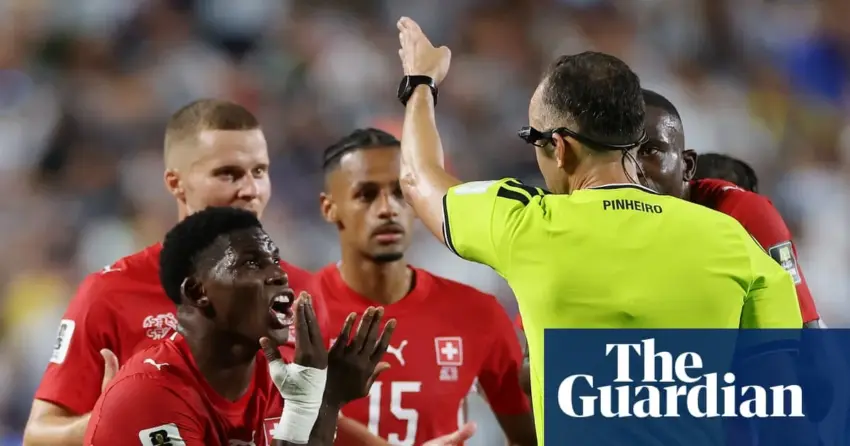
Argentina secured a 3-1 victory over Switzerland, advancing to the World Cup semi-finals, but the match was marked by a controversial red card incident involving Swiss forward Breel Embolo. The decision, stemming from a “mistaken identity” VAR review, left Switzerland playing with 10 men for a significant portion of the game, including all of extra time.
The decisive goals for Argentina came from Julian Alvarez in the 112th minute, who curled a shot into the top corner from outside the penalty area, and a late third from Lautaro Martinez. These goals broke Switzerland’s resistance after Dan Ndoye had canceled out Alexis Mac Allister’s opening goal for Argentina.
The semi-final match for Argentina is set against England on Wednesday. This upcoming fixture promises to be a compelling tie, given the historical rivalry between the two nations.
Controversial Red Card Incident
The pivotal moment of the match occurred in the 72nd minute. Switzerland had just equalized through Dan Ndoye five minutes prior and appeared to be gaining momentum against the defending champions. During a challenge, Argentina midfielder Leandro Paredes dove in on Breel Embolo. The Portuguese referee, João Pinheiro, initially issued a yellow card to Paredes.
However, the VAR team in Dallas intervened, recommending a review for “mistaken identity.” Multiple replays suggested that there was no contact from Paredes and that Embolo had dived. The VAR review led to the official withdrawing the booking for Paredes and instead showing a yellow card to Embolo for simulation. As Embolo had already received a yellow card in the first half for a foul on Paredes, this second booking resulted in a red card, ejecting him from the game.
Switzerland head coach Murat Yakin expressed strong disapproval of the decision, stating that it was “completely not understandable” and that the rule “destroyed the game today.” He also mentioned that he was unaware of the rule change before the match. Swiss midfielder Remo Freuler echoed this sentiment, calling the situation “a disaster” and questioning the referee’s actions.
The application of the “mistaken identity” rule in this manner is a new development for the 2026 World Cup. Previously, this rule was primarily used when a referee incorrectly identified a player from the same team who committed a foul. However, the International Football Association Board (Ifab) expanded the definition to include situations where a player is booked, but the offense was committed by the opposing team. This allows for a review if the referee clearly penalizes the wrong player, regardless of the team.
This was the second instance of this expanded rule being applied in the tournament. The first occurred in the United States’ opening game against Paraguay, where a yellow card initially given to US defender Tim Ream was rescinded and instead issued to Miguel Almirón for simulation after a VAR review.
Argentina’s Path to the Semi-Finals
Before Embolo’s dismissal, Argentina had not been able to capitalize effectively on their one-goal advantage. In the second half, Lionel Scaloni’s team adopted a more passive formation and was outshot before the red card incident. Switzerland had controlled possession and found ways to penetrate Argentina’s midfield, leading to Dan Ndoye’s equalizer.
Despite the numerical advantage after Embolo’s red card, Argentina did not immediately become convincing. Switzerland, even with 10 men, continued to pose problems for the World Cup holders. The Swiss defense eventually conceded twice in a nine-minute span during extra time, leading to their exit from the tournament.
Lionel Messi, for the first time in this World Cup, did not score in the match. His early outswinging corner led to Alexis Mac Allister’s opening goal, marking Messi’s 10th World Cup assist. This assist continued a trend where each of his World Cup assists has been for a different goalscorer, dating back to his debut in 2006.
The match highlighted some defensive vulnerabilities for Argentina, with Switzerland frequently getting behind their defense. This suggests that England may find opportunities to challenge Argentina’s backline in the upcoming semi-final. The cheapest tickets for the semi-final in Atlanta are reportedly going for $3,000.
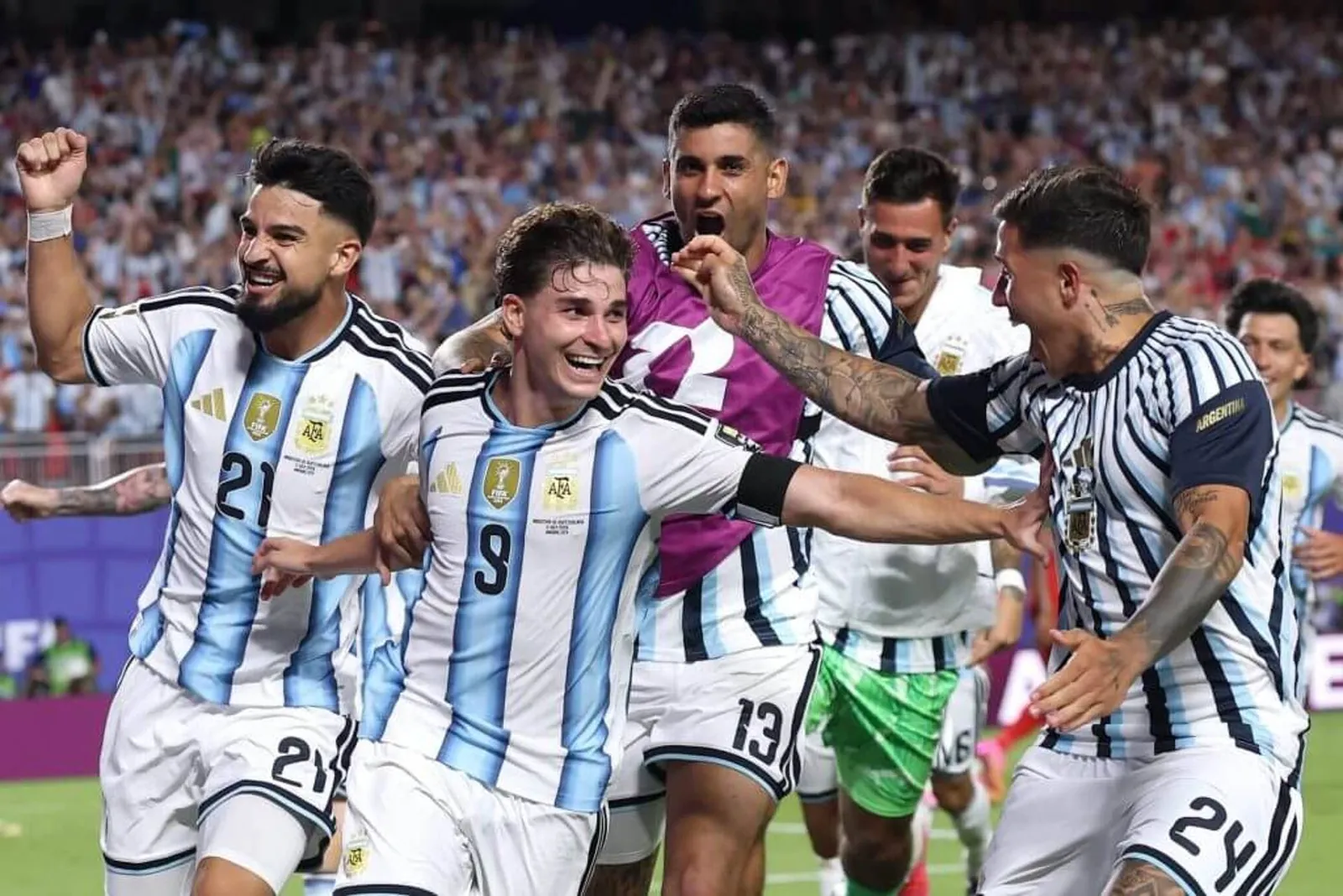
The last time England faced Argentina was 21 years ago in a friendly match in Geneva, which England won 3-2. Lionel Messi was not present in that game due to a suspension. The upcoming semi-final will mark Messi’s first encounter with England on the field.
The memory of the 1986 World Cup match, where Argentina defeated England 2-1, with Diego Maradona scoring a famous goal, will likely be a talking point. The two World Cup matches between the teams since then have been very close, with Argentina winning on penalties in 1998 and England winning via a penalty in 2002.
The match against Switzerland demonstrated that Argentina’s knockout games in this tournament have not been straightforward, despite their star power. The team will face England in the semi-finals on Wednesday.
Read Also
Source: nytimes.com

Mason Reed
Sports reporter covering football, basketball and international competitions.