
As fantasy football drafts progress beyond the initial rounds, identifying reliable players becomes increasingly important for building a championship-contending roster. While many seek breakout stars, a foundation of consistent performers is crucial. Several players available after Round 3 are considered safe contributors, offering a blend of reliability and potential upside.
Reliable Picks After Round 3
Tetairoa McMillan, a wide receiver for the Carolina Panthers, is projected as a strong option. Despite playing on an offense that ranked 27th in both points and yards in 2025, McMillan earned Offensive Rookie of the Year honors and finished as WR16. With quarterback Bryce Young’s development and a diverse receiving corps including Jalen Coker, Xavier Legette, and John Metchie III, McMillan is expected to maintain his role as Young’s primary target. His current average draft position (ADP) places him around the Round 3/4 turn as WR15.
At tight end, Jelani Warren of Indianapolis presents a valuable option in Round 5 (TE4). His performance in 2025 was impacted by Daniel Jones’s Achilles injury in Week 14. However, Jones is now fully recovered and participating in camp. The trade of Michael Pittman Jr. to the Steelers has opened up 111 targets, many of which could go to Warren, who shared similar short and intermediate route spaces with Pittman. Warren is expected to benefit from Jones’s return and minimal target competition.
David Montgomery, now with Houston, is a running back available in Round 5 (RB23). He was traded by the Lions due to a desire for more opportunities, not performance issues. In 2025, Montgomery achieved his second-best yards-per-carry mark at 4.5 and significantly increased his rushing yards over expected. He is positioned to be Houston’s lead running back, handling red-zone and early-down carries. His arrival in Houston is compared to Joe Mixon’s 2024 season with the team, where Mixon averaged 17.2 points per game.
Another running back, D’Andre Swift of the Bears, is often underappreciated and can be drafted in Round 5 (RB24). Despite never reaching RB1 status in his six previous seasons, Swift has consistently finished within the RB15-21 range across three different teams. He and teammate Kyle Monangai are expected to complement each other without infringing on roles. Swift offers less variance compared to other nearby ballcarriers like Quinshon Judkins (RB21), TreVeyon Henderson (RB22), and Bhayshul Tuten (RB25).
Quarterback Jalen Hurts of the Eagles is a reliable choice in Round 6 (QB6). His track record includes top-10 fantasy quarterback finishes in his last five seasons as a full-time starter, including QB9, QB3, QB2, QB8, and QB7. Hurts maintains his value through his role as a finisher, leading all signal-callers in goal-line and red-zone carries in four of the past five seasons, accumulating 197 and 104 attempts respectively, and scoring 60 touchdowns during that period. Despite questions surrounding the Eagles’ offense after the A.J. Brown trade, Hurts still has multiple weapons, including Saquon Barkley, DeVonta Smith, Dallas Goedert, Makai Lemon, and Dontayvion Wicks.
Michael Pittman Jr., now with the Steelers, is a wide receiver to consider in Round 8/9 (WR43). He is seen as an ideal fit for the 2026 version of quarterback Aaron Rodgers, who now favors quick-hitting, shallow routes. Rodgers’s approach led to a league-low 6.0 average air yards per attempt, with running back Kenneth Gainwell leading the Steelers in receptions last year. With Gainwell gone, Pittman, a possession receiver who averaged 9.8 yards per reception with the Colts in 2025, is poised to take on a significant share of short-area targets.
Finally, Brock Purdy of the 49ers is a quarterback option in Round 9 (QB13) for those who prefer to wait on the position.
Dark-Horse WR1 Candidates
Beyond the reliable picks, several wide receivers are identified as dark-horse candidates with the potential to finish as WR1s, despite their current lower ADPs.
Jayden Reed of the Green Bay Packers (WR40) is one such candidate. The Packers’ offense performed well last season, ranking fourth in EPA per play and third in EPA per pass attempt. With Romeo Doubs and Dontayvion Wicks no longer with the team, 131 targets are available. While Christian Watson is a popular fantasy target, Reed is significantly cheaper at WR47. Despite an injury-limited 2025 season, Reed was the Packers’ most impactful receiver in the two previous seasons, finishing as WR26 in 2024-25 and WR23 in per-game scoring the year prior. He has reportedly taken first-team reps in two-receiver sets during training camp, suggesting an increased role.

Quentin Johnston of the Chargers (WR46) is another player with WR1 potential. Recent reports indicate the Chargers do not plan to sign a veteran receiver before the season, suggesting they will move forward with their current receiving corps. This development is favorable for Johnston, who has accumulated 16 total touchdowns over 29 games in the past two seasons and set a career-high of 735 yards last season. With Keenan Allen seemingly out of the picture, Johnston is set for his largest target share yet, which could propel him into the top 12 at the position.

Deebo Samuel of the 49ers (WR54) is considered a long-shot candidate, but one with a plausible path to a WR1 finish. Samuel, at 30 years old, previously achieved WR1 seasons in 2021-22 and 2023-24. Injuries to teammates like Ricky Pearsall (out for the year), Mike Evans, and Christian Kirk (limited in training camp), along with George Kittle’s recovery from an Achilles injury, position Samuel and De’Zhaun Stribling as the team’s top receiving threats. Samuel’s familiarity with Kyle Shanahan’s offensive scheme could allow him to capitalize if these injuries persist.
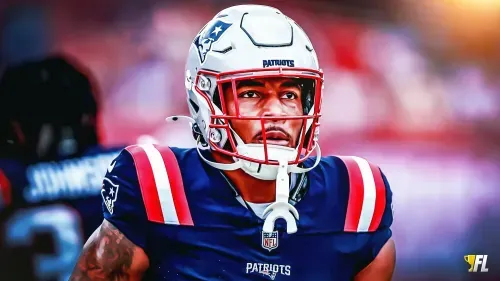
These players offer various levels of risk and reward, but each presents a compelling case for exceeding expectations in the upcoming fantasy football season.
Source: nfl.com

Mason Reed
Sports reporter covering football, basketball and international competitions.