Tuchel Reflects on World Cup Exit
Thomas Tuchel, the manager of England, has described the team’s World Cup semi-final defeat to Argentina as a “scar” that is becoming “more and more painful every single day.” Following the 2-1 loss on Wednesday night, Tuchel has faced significant criticism regarding his tactical decisions. He has stated that he takes “personal responsibility” for the outcome but maintains that he does not regret any of the choices he made during the match in Atlanta.
England was leading 1-0 with only five minutes remaining before conceding two late goals, which allowed Argentina to advance to the final. Tuchel’s decisions, including a retreat in the second half, defensive substitutions, and a switch to a back five, have been particular points of contention. He specifically addressed the criticism for replacing Anthony Gordon with Ezri Konsa during the second drinks break, asserting that he does not regret his decisions as they were made to help the team achieve a result.
The manager also responded to comments from Donald Trump, who criticized his tactics, particularly the use of Harry Kane in a defensive role. Tuchel clarified that Kane’s deep positioning was a function of the team’s defensive block rather than specific instructions for the player. He explained that when a team is pushed back into a deep block, everyone defends.
Tuchel acknowledged the pain felt by himself and his players, stating, “We have to live with this. So it’s our pain, my pain, and the players’ pain.” He added that the defeat is a “very painful” one and will hurt for a long time, noting that it is unfortunately not the first such experience in his career and likely not the last.
Tactical Debates and Player Development
The aftermath of England’s elimination has also brought renewed focus on the team’s playing style and player development. Tuchel highlighted Argentina’s cultural emphasis on ball possession, noting that it starts from a young age and instills a natural self-confidence to always seek the ball. This observation implicitly contrasts with England’s struggles to maintain possession under pressure, a recurring issue that dates back to the 2002 World Cup when Michael Owen scored against Brazil, and the team subsequently tried to defend their lead unsuccessfully.
Despite the Football Association’s stated “England DNA philosophy,” which aims to produce players capable of “intelligently dominate possession,” there remains a perceived shortage of top-class central midfielders with the technical skills needed to succeed in crucial matches. A notable statistic from the semi-final showed that England had only 12% possession between Gordon’s goal in the 55th minute and Lautaro Martínez’s winner in stoppage time. During this period, 12 of their 39 attempted passes came from goalkeeper Jordan Pickford, with only five occurring in Argentina’s half, indicating an inability to play out of trouble when pressed.
The FA’s “England DNA philosophy,” devised by Dan Ashworth in 2014, emphasizes that England teams should “sense changing moments in the game both in and out of possession, reacting instinctively and intelligently.” Ashworth, who returned to St George’s Park in May in a newly created role, is tasked with overseeing the regeneration of the National Football Centre and building long-term systems to support the FA’s performance ambitions, particularly in developing players who can perform without fear under pressure.
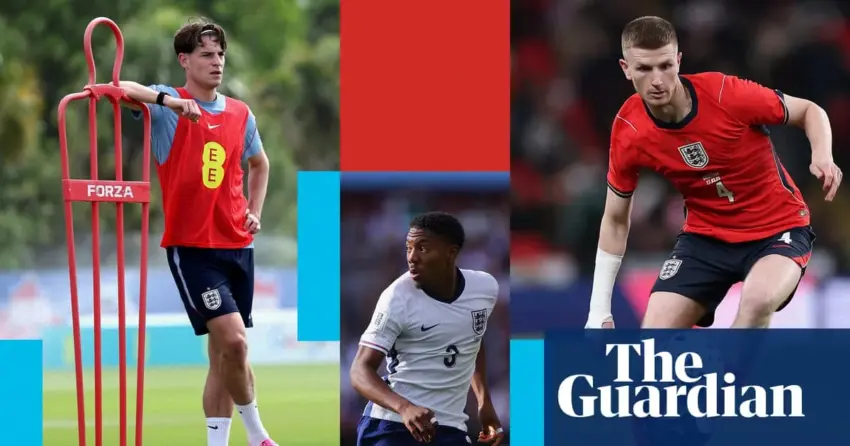
While the academy system in England is well-resourced, it has not consistently produced technically gifted midfielders capable of dictating play. However, there are signs of change. Elliot Anderson, a recent Manchester City signing, has emerged as an England first-choice and is seen as part of a new generation of midfielders who could excel at the European Championship in two years. Other promising players include Kobbie Mainoo, whose skills were crucial in Manchester United’s revival last season, and Alex Scott of Bournemouth, who formed a successful partnership with Anderson at last summer’s European Under-21 Championship.
Myles Lewis-Skelly of Arsenal, a 19-year-old midfielder, has also been highlighted for his potential, having excelled in the Champions League final and demonstrating the self-confidence Tuchel described as essential. These players, along with Adam Wharton of Crystal Palace, who possesses a strong passing range and confidence on the ball, could offer solutions to England’s midfield challenges. England is scheduled to play France in the third-place play-off game on Saturday, a match Tuchel admitted “nobody wants” to play, but which offers a chance for England to achieve its best World Cup result in 60 years.
Read Also
- Donald Trump questions Thomas Tuchel's tactics in England's World Cup semi-final loss
- White responds to McGregor's call for Holloway rematch after injury
- Aaron Judge's rib injury not fully healed, still not cleared for baseball activities
- World Cup final features Spain against Argentina in a clash of generations
Source: nytimes.com

Mason Reed
Sports reporter covering football, basketball and international competitions.