Cyclists Face Extreme Heat Conditions
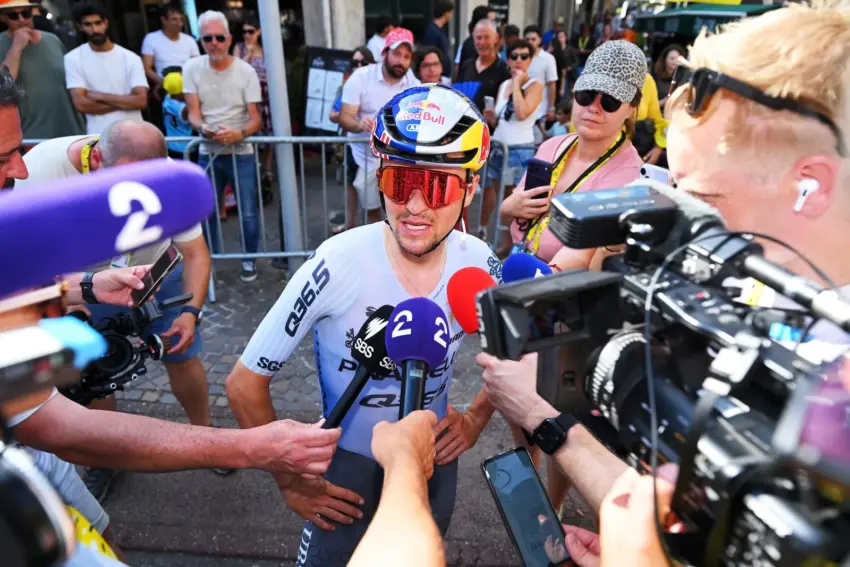
Tadej Pogacar has called for significant changes to the professional cycling calendar, suggesting that races should avoid the hottest months of July and August in warm regions. This comes after another day of intense temperatures during the Tour de France, where the ninth stage, from Malemort to Ussel, was shortened due to the heatwave. Mathieu van der Poel ultimately won this stage, with Tom Pidcock securing third place.
Pogacar, a four-time winner of the Tour de France, expressed his desire for a completely different calendar if he had the authority to implement such changes. He noted that while starting stages earlier, perhaps at 8 or 9 AM, could be a step, it does not fully address the issue as riders would still finish in the heat. He acknowledged the physical demands this would place on riders, stating, “Maybe the next step is to start the stages earlier. Yesterday there was a proposal to start at 10, but it doesn’t change anything because then you finish in the heat. You need to start at eight or nine, or even before. It’s a little bit shit, but I think I’ve said enough.”
The undulating stage to Ussel, which included nearly 2,700 meters of altitude gain and three steep climbs in its final 80 kilometers, presented a challenging environment for the peloton. Despite the stage being shortened, the high pace and demanding terrain had notable effects on many riders.
Breakaway Success and Mechanical Issues
The shortened ninth stage saw a successful breakaway, a relief for many who felt that such tactical moves were becoming increasingly difficult against the power of the main peloton. Mathieu van der Poel emerged victorious from this group, with Tobias Halland Johannessen finishing second and Tom Pidcock in third. This outcome was celebrated by fans and teams alike, demonstrating that strategic escapes can still succeed.
Pidcock, racing for Pinarello-Q36.5, had a strong performance despite encountering mechanical problems during the final climb. He reported that his gears stopped working due to a piece of asphalt lodged in his right-hand shifter. This issue prevented him from changing gears effectively, particularly during the crucial final sprint.
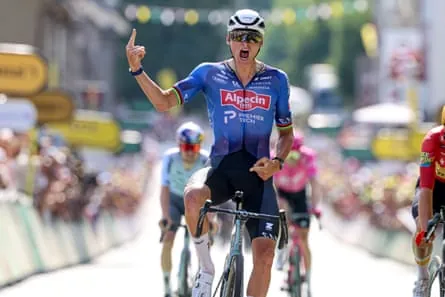
Despite the setback, Pidcock acknowledged the difficulty of beating Van der Poel in such sprint situations, stating, “He’s very hard to beat in those situations.” He expressed satisfaction with his overall performance, viewing it as a positive sign of his improving form. This marked his best Tour de France stage result to date.
Rider Wellbeing and Future Discussions
The extreme heat has prompted concerns about rider wellbeing, with many resorting to ice baths and cryotherapy units to manage their core temperatures post-race. Teams are utilizing various methods, including paddling pools and portable cryotherapy, to aid recovery.
The Professional Cyclists Association (CPA) echoed Pogacar’s sentiments, emphasizing the need to fully implement extreme weather conditions protocols. The CPA called for discussions with all stakeholders during the winter to find solutions before the summer of 2027, advocating for an evolution in summer race start times to protect athlete health.
Some riders, including Tiesj Benoot, felt that shortening the stage did not significantly alleviate the challenges, noting that the peloton had already endured eight days of similar heat. Christian Prudhomme, the Tour director, stated that an earlier start for the Ussel stage was not logistically feasible, citing existing early wake-up times for anti-doping controls.
The upcoming rest day is expected to offer some relief, though temperatures are predicted to remain high into the middle of next week.
Read Also
Source: theguardian.com

Mason Reed
Sports reporter covering football, basketball and international competitions.