On April 29, 2026, the Supreme Court delivered a ruling that would reshape the landscape of voting rights in America, specifically targeting protections established by the Voting Rights Act. The court’s decision came after four years of litigation surrounding Louisiana’s congressional map, which allowed states to draw district lines with minimal oversight — opening doors for racial gerrymandering.
The case, Louisiana v. Callais, concluded with a 6-3 decision. Justice Samuel Alito wrote that while the court wasn’t striking down Section 2 of the Voting Rights Act, it was interpreting it in a way that necessitated proof of intentional discrimination. Justice Elena Kagan, dissenting, argued vehemently that this interpretation effectively eviscerates decades of progress made under the Voting Rights Act.
Key points from the ruling:
- The ruling invalidates Section 2 as it has been understood for four decades.
- States can now draw district lines that might dilute the political power of minority voters.
- It could lead to a redistricting wave favoring Republicans in majority-minority districts.
The implications are staggering. With one-third of Louisiana’s population being Black and only two majority-Black districts created by the new map, many fear this will disenfranchise voters who fought hard for their rights. Derrick Johnson from the NAACP expressed that this decision is a “devastating blow” to what remains of the Voting Rights Act — a license for corrupt politicians who want to rig the system.
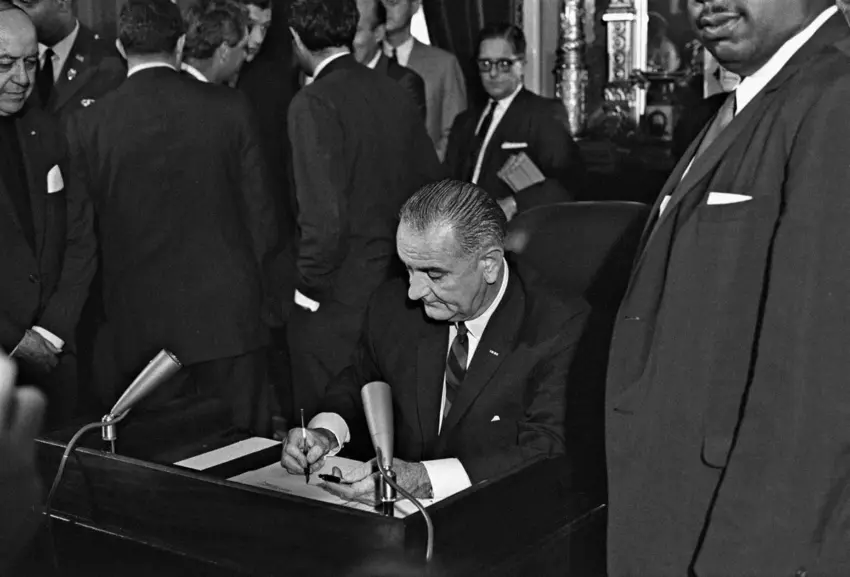
Historically, the Voting Rights Act was born from bloodshed and struggle during the civil rights movement, following events like the brutal Selma marches. For sixty years, it restricted racial gerrymandering and discrimination in voting systems. Yet now, with this ruling following a similar trajectory as Shelby County v. Holder in 2013 — which eliminated preclearance requirements — advocates worry about an era where minority voices could be silenced once again.
Reactions from legal experts:
- Justice Kagan stated: “The Voting Rights Act is — or, now more accurately, was— ‘one of the most consequential… exercises of federal legislative power in our Nation’s history.’”
- Rick Hasen remarked on the seismic impact this ruling will have on American politics: “It is hard to overstate what an earthquake this will be for American politics.”
- Alito’s commentary highlighted how this ruling does not explicitly strike down laws but alters their enforcement significantly.
The stakes couldn’t be higher as Louisiana faces a deadline in 2024 to draw a new congressional map. The future of voting rights hangs in balance as communities brace themselves for what these changes mean for representation and democracy itself.

Sarah Jenkins
Sarah is an investigative reporter focusing on politics and social issues.