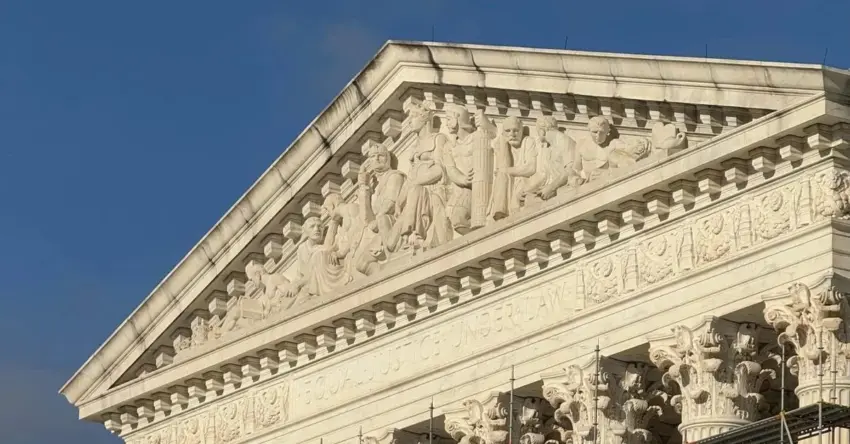
On April 29, 2026, the U.S. Supreme Court issued a ruling in Louisiana v. Callais that significantly undermines the Voting Rights Act, allowing states to engage in discriminatory voting practices. This decision has sent shockwaves through communities that have fought hard for equitable representation.
Before this ruling, many believed that the Voting Rights Act served as a robust shield against racial discrimination in elections. For decades, it provided crucial protections for minority voters, particularly Black communities who had long been marginalized in political processes. The expectation was clear: Congress would continue to uphold these protections and address any attempts at gerrymandering or racially biased redistricting.
The turning point came with the Supreme Court’s 6-3 decision, which weakened Section 2 of the Voting Rights Act. Critics argue that this ruling allows states like Louisiana to enact discriminatory voting maps and laws without significant oversight. Specifically, it struck down a congressional map that had enabled Black voters to elect candidates of their choice — a stark reminder of how quickly progress can be dismantled.
The immediate effects are alarming. This ruling raises new evidentiary hurdles for voters challenging racially discriminatory maps, making it far more difficult for them to protect their rights at the polls. As Justice Elena Kagan noted, “[The Voting Rights Act] ushered in awe-inspiring change, bringing this Nation closer to fulfilling the ideals of democracy and racial equality.” Yet, this recent decision threatens to reverse those ideals.
Experts warn that the implications could extend beyond Louisiana, potentially leading to the elimination of majority-minority districts across southern states. Chris Kieser remarked on how “the very idea of a majority-minority district and having a candidate of their choice is kind of antithetical to democracy.” The ramifications are profound — communities may find themselves further disenfranchised.
Key facts:
- The Supreme Court’s decision allows states to enact discriminatory voting maps and laws.
- This ruling could lead to potential elimination of two opportunity districts for Black voters in Louisiana.
- Experts predict up to twelve Democrats may be ousted due to these redistricting changes.
This development leaves many questioning what comes next. Officials have suggested that Congress may need to step in and enact new protections against racial and partisan discrimination in redistricting. Meanwhile, some states might take matters into their own hands and adopt their own voting rights protections.
The Voting Rights Act has served as a federal protection against racial discrimination in elections for six decades—a legacy now at risk as judicial interpretations shift. As communities grapple with these changes, they face an uncertain future where their voices may no longer resonate as strongly within the halls of power.

Mark Thompson
Mark is a seasoned journalist with over 10 years of experience covering global news and events.