The WNBA is experiencing a period of intense drama that some observers suggest is becoming a recurring cycle. This situation is leading to concerns that the league, despite attracting significant viewership, risks alienating both dedicated fans and new audiences.
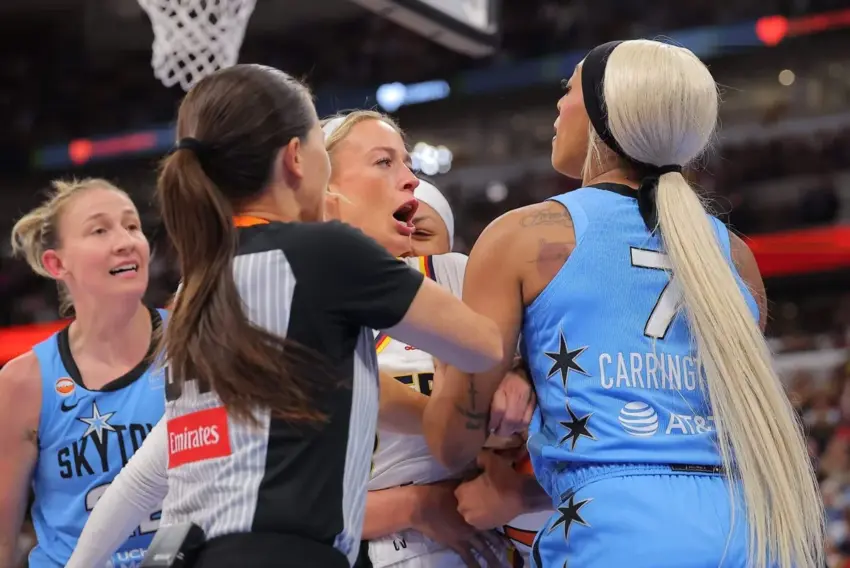
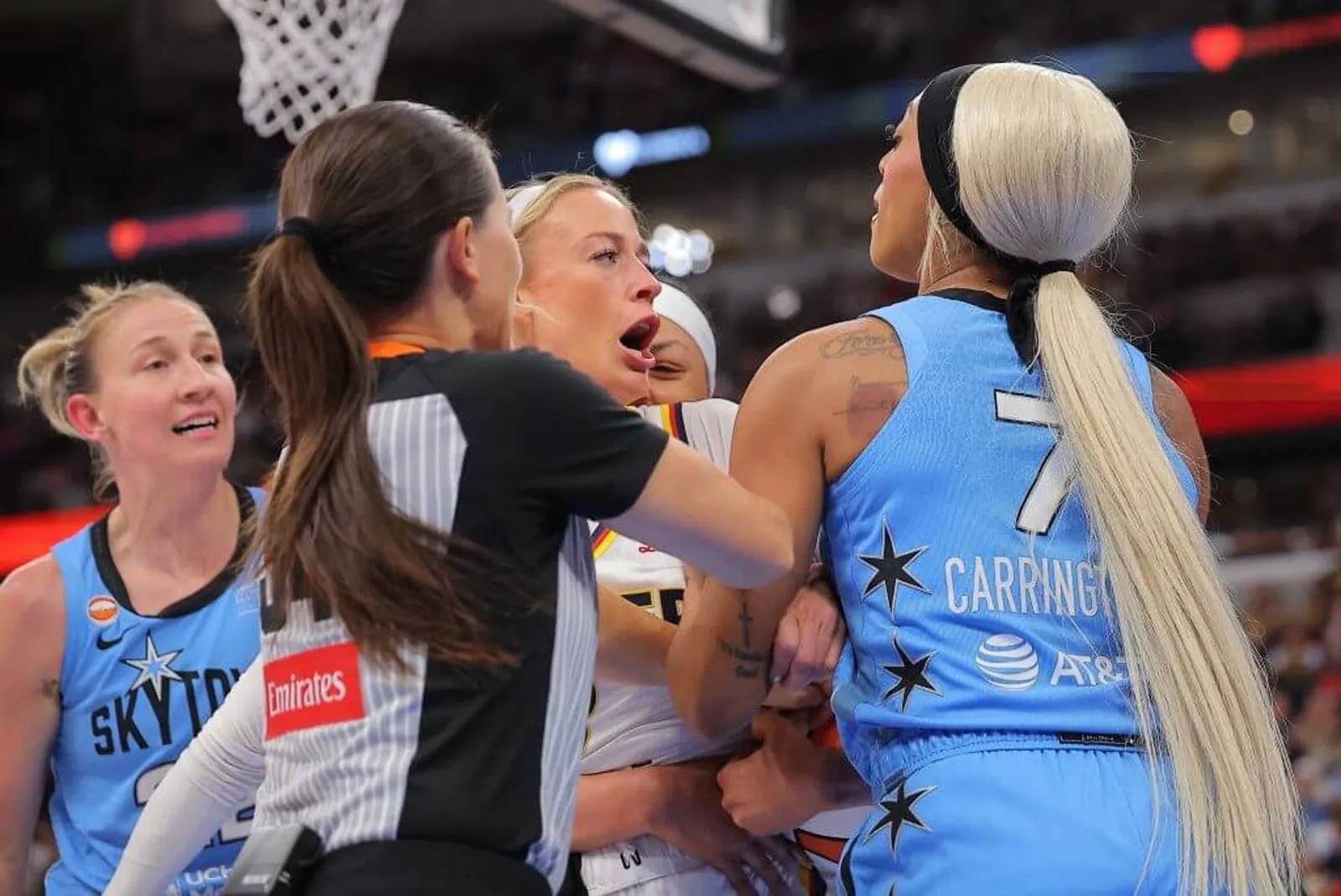
One notable incident involved Indiana Fever guard Sophie Cunningham and Chicago Sky guard DiJonai Carrington. During a game, Carrington committed a flagrant foul on Cunningham, leading to her ejection. Following her removal from the game, Carrington posted a comment on social media that included the phrase “WHITE PRIVILEGE.” This post further intensified discussions surrounding race within the league.
The incident drew attention during a post-game media session where Fever center Makayla Timpson, known as “KK,” reacted visibly when a reporter mentioned Carrington’s social media post. Timpson reportedly widened her eyes, glanced away, and covered her face, appearing to wish to avoid commenting on the matter.
Divisive Topics and Player Reactions
The league has seen players engage with divisive topics. Sophie Cunningham, for instance, has publicly shared her views on the participation of transgender athletes in women’s sports. This stance has generated discussion, particularly given the WNBA’s strong connection to the LGBTQIA+ community. Reports indicate that a significant percentage of Americans share Cunningham’s opinion on this issue, according to a survey.
The state where Cunningham plays, Indiana, was among the first to enact legislation prohibiting transgender girls from participating in public school sports. This issue, however, is largely hypothetical within the WNBA itself, as no transgender women are currently competing in the league. Despite this, the topic has drawn attention from figures like former NBA players Enes Kanter Freedom and Royce White, who have declared their eligibility for the WNBA Draft in what appears to be an attempt to challenge the league’s gender eligibility rules.
DiJonai Carrington’s social media post after her foul on Cunningham was described as unnecessary and potentially dangerous. While Carrington has faced accusations of playing the race “card” by Cunningham, she has also reportedly experienced racism and homophobia in the past. However, her use of the phrase “White privilege” in this context has been seen by some as undermining its significance as a societal concern.
League’s Role in Ongoing Debates
The ongoing controversies have prompted commentary on the league’s handling of such situations. One sports commentator, Stephen A. Smith, attributed some of the political turmoil to “the right” but also argued that the WNBA itself has contributed to the situation by not establishing clear rules and leadership, particularly regarding the transgender athlete issue. Smith suggested that the league’s lack of clear guidelines has allowed these disputes to dominate conversations.
Smith emphasized the need for clear rules and regulations within the league to prevent such incidents from escalating. He also pointed out that while some may be exploiting the controversies for political gain, the league’s perceived vulnerabilities have made it susceptible to such exploitation. He noted that everything surrounding the league risks becoming politicized.
The commentator also highlighted how figures like Florida Attorney General James Uthmeier have shown interest in the discussions surrounding players like Sophie Cunningham. Smith questioned whether similar attention would be given if an athlete expressed liberal views on such matters, suggesting a political dimension to the engagement. He also stated his agreement with Cunningham’s position on protecting female athletics.
The constant cycle of quarrels and controversies is seen by some as overshadowing positive developments within the league, such as Kayla McBride achieving a record for three-pointers, the Washington Mystics‘ winning streak, and Jessica Shepard’s triple-double performances. The league’s average viewership, such as the 2.52 million viewers for the Fever–Minnesota Lynx game on August 2, indicates significant audience interest, but the ongoing drama could potentially deter both long-time fans and new viewers.
The sentiment among some is that engaging with the WNBA has become akin to “psychological warfare,” requiring one to brace for impact whenever the league is mentioned in media. The league’s ability to navigate these challenges and establish clearer guidelines will be crucial in shaping its future narrative.
The ongoing situation has led to calls for the league to take a definitive stand on contentious issues, as critics are likely to continue highlighting perceived inconsistencies.
Source: nytimes.com

Mason Reed
Sports reporter covering football, basketball and international competitions.