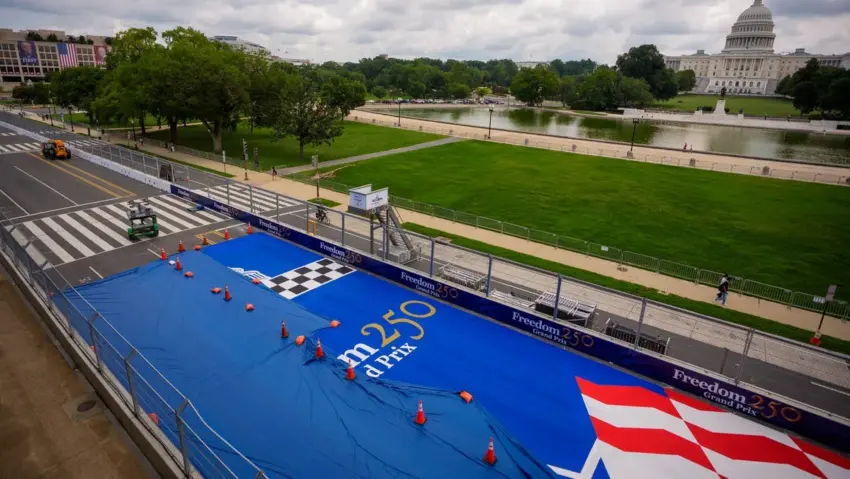
Traffic challenges in the capital
Washington, D.C., is experiencing significant traffic disruptions as preparations continue for the inaugural Freedom 250 Grand Prix this weekend. The event, which will feature IndyCar drivers reaching speeds close to 200 mph on city streets, has led to extensive road closures and parking restrictions, impacting both residents and visitors.
Commuters have reported considerably slower travel times, with some journeys taking more than three times longer than usual. One reporter noted that walking a third of a mile along 14th Street from Constitution Avenue to Independence Avenue was faster than vehicular traffic on Wednesday afternoon. A Metrobus, for instance, took approximately seven minutes to cover just one block near the National Museum of African American History and Culture, encountering multiple red lights.
Nancy Marlow, a commuter from Virginia, described the current traffic situation as “worse than cherry blossom,” stating that a trip that typically takes 20 minutes had extended to over an hour. Another Virginia commuter, Chris Caron, who works near the White House, noted that the traffic challenges have worsened daily throughout the week, prompting him to consider avoiding downtown despite his workplace location.
The District Department of Transportation Director Sharon Kershbaum has indicated that the gridlock is not expected to improve in the immediate future. She warned that Friday, in particular, is likely to see even more severe congestion. Kershbaum advised anyone needing to access downtown areas to utilize public transportation, highlighting that pedestrian and biking areas will also become more restricted.
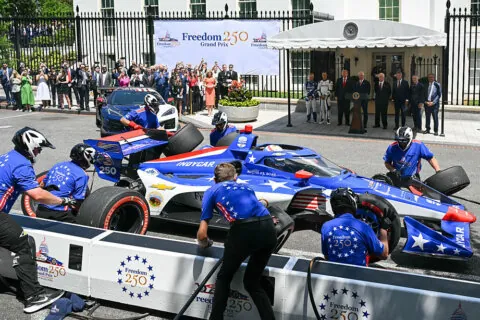
Resident and visitor reactions
The extensive preparations for the Freedom 250 Grand Prix have elicited varied reactions from those in Washington, D.C. While some residents have expressed frustration over the disruptions, others are taking the changes in stride or viewing them positively.
Liem Addis, a visitor from Portland, Oregon, observed the standstill traffic on the National Mall, expressing relief that she was navigating the city on foot. A local Washingtonian, sitting in a work truck, acknowledged that such events inevitably lead to traffic, stating he did not mind the delays.
The event, scheduled for August 22-23, is expected to draw around 250,000 people to the National Mall. It is positioned as a signature celebration for the country’s 250th anniversary. The seven-turn race circuit will encompass the east end of the National Mall, including sections of Pennsylvania and Independence Avenues, which are key traffic intersections.
Despite the significant planning involved, not all residents were fully aware of the event. Michael Crawshaw, who has lived in the District for seven years, was surprised by the barricades around the racetrack after emerging from the Archives-Navy Memorial-Penn Quarter Metro station. He questioned whether a race would truly take place in the city, and while he does not commute through the city, he speculated he would be “very upset” if he did.
Aaron Jackson, another resident visiting the National Gallery of Art, echoed similar sentiments, expressing initial confusion about navigating the area. He managed to reach the museum via a designated pathway but described the prospect of driving around the racetrack as a “nightmare.”
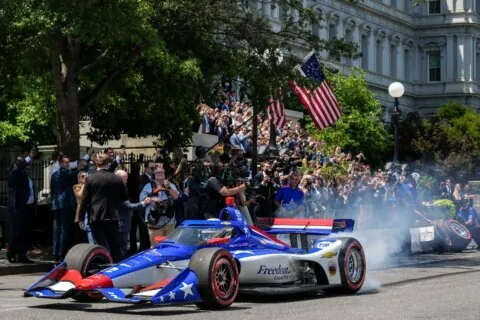
Event details and ongoing restrictions
The Freedom 250 Grand Prix course spans 1.66 miles and includes major thoroughfares such as Pennsylvania, Constitution, and Independence Avenues. The most extensive street closures began on Friday at 3 a.m. and are slated to continue through 11:59 p.m. Sunday. These closures include the 12th Street Expressway and several ramps connecting to Interstate 395.
Some traffic restrictions related to the event were implemented last month and are expected to remain in place until September 3. These restrictions affect parking lanes, curb lanes, and partial travel lanes, facilitating the construction and dismantling of the race infrastructure. After the race concludes, some restrictions will persist as crews work to dismantle the course.
For some, the event brings economic benefits. Caleb Walker, an 18-year-old Starbucks worker from Northeast D.C., noted that the increased foot traffic is “good for business.” He also expressed interest in the military vehicles and the activity surrounding the track as preparations were finalized.
Jason Michaud, a visitor from Las Vegas, traveling with his wife and daughter, found that the 1.7-mile racetrack necessitated longer walks to reach attractions like the Smithsonian museums, which are typically easily accessible across the National Mall. The Freedom 250 Grand Prix is scheduled to take place on August 22-23.
Source: wtop.com

Mason Reed
Sports reporter covering football, basketball and international competitions.