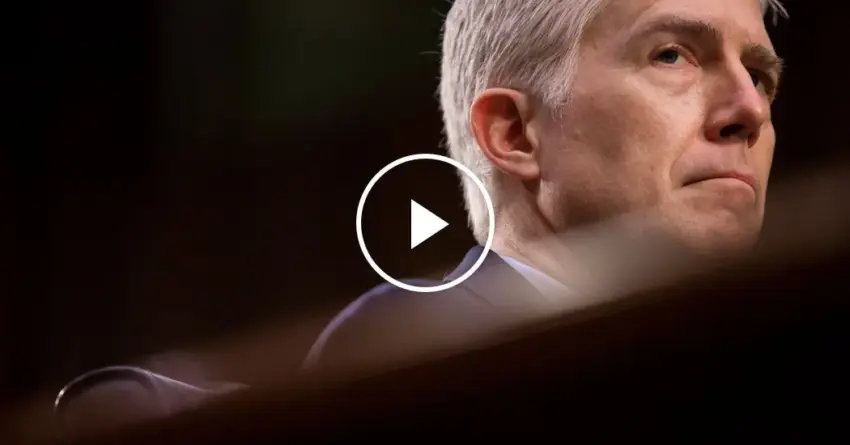
Justice Neil Gorsuch has made it clear: his loyalty is to the Constitution, not to any individual, including President Trump. This assertion comes amid ongoing criticism from Trump regarding Supreme Court rulings that have not aligned with the former president’s expectations.
Gorsuch joined the Supreme Court in 2017, appointed by Trump himself. Yet, he recently rebuffed Trump’s suggestion that justices owe a certain allegiance to their appointer. “My loyalty is to the Constitution, the laws of the United States,” he stated emphatically, reinforcing a principle of judicial independence.
Trump’s discontent stems from votes by Gorsuch and fellow appointee Amy Coney Barrett, particularly in cases where their decisions diverged from Trump’s agenda. The former president has been vocal about his disappointment, suggesting that justices should support the policies of those who nominated them.
However, Gorsuch remains steadfast in his belief that federal judges have life tenure for a reason: to apply the law fairly, without bias or influence from political figures. “You’ve given nine old people life tenure,” he remarked, highlighting the importance of a stable judiciary.
This conversation isn’t just about personal loyalties; it’s about maintaining the integrity of constitutional law. Gorsuch has urged those advocating for reforms within the judiciary to understand its historical context. “Make sure you know what you’re reforming before you tinker with it,” he advised.
The structure of the federal judiciary—set by Congress at nine justices in 1869—has functioned effectively according to Gorsuch. He believes the current composition works reasonably well and serves its purpose in upholding justice.
As discussions surrounding judicial reforms continue, observers note that Gorsuch’s emphasis on constitutional fidelity may shape future debates on how justices should operate within their roles. The next ruling from this court could further illustrate this tension between political expectations and judicial independence.

David Miller
David covers technology, science, and innovation from around the world.