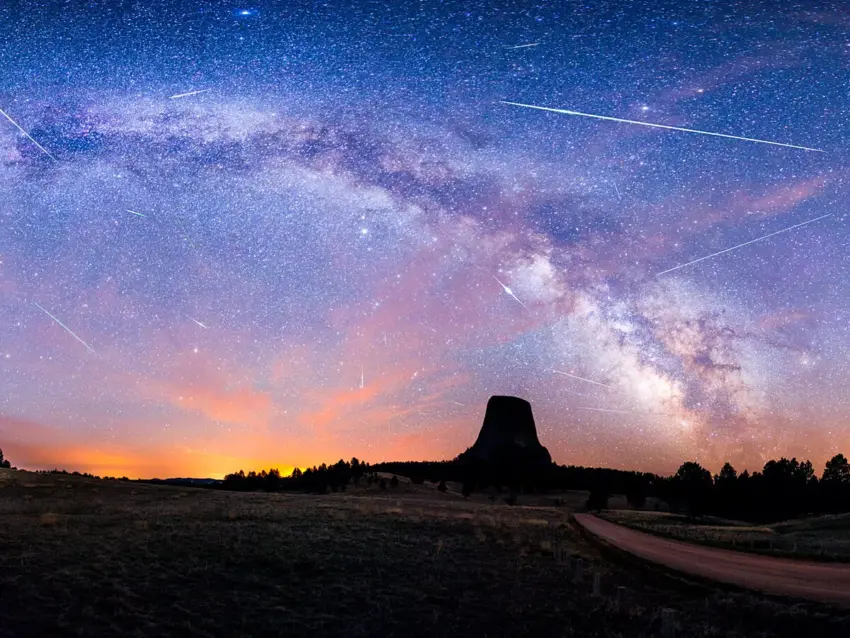
The Eta Aquarid meteor shower is expected to reach its peak on May 6, 2026, in Oregon, but a bright moon may overshadow the spectacle this year. Stargazers had anticipated a dazzling display of shooting stars, but now they face the challenge of competing with moonlight.
In previous years, the Eta Aquarids dazzled observers with up to 50 meteors per hour under ideal conditions. The thrill of watching long streaks of light—trails left by debris from Halley’s Comet—has drawn countless enthusiasts into the dark sky. But this year, those numbers might dwindle. In the Northern Hemisphere, viewers typically see between 10 to 30 meteors per hour. The bright moon could further reduce visibility.
But what does this mean for those hoping to catch a glimpse? A bright moon can wash out the fainter meteors, leaving only the most prominent streaks visible. Teri Gee, an astronomy expert, notes, “The farther south you are, the better you’ll see it.” For many in Oregon, where clear skies are expected during the early morning hours of May 6, this means adjusting expectations.
Key facts about the Eta Aquarid meteor shower:
- The shower is active annually from mid-April through late May.
- Meteors travel at speeds of around 40 miles per second.
- The radiant point of the shower is located in the constellation Aquarius.
- This meteor shower results from debris left behind by Halley’s Comet.
Nico Adams, another stargazing enthusiast, describes what to look for: “You’re looking for bright streaks that appear in the corner of your eye for a fraction of a second.” The experience can be magical—if conditions permit. Yet there’s uncertainty; officials warn that cloud cover could also play a role. Reports suggest there’s a chance of cloud cover ranging from 66% to 84% along the Oregon Coast.
The excitement surrounding meteor showers often stems from their predictability. As one expert puts it, “Meteor showers yield a more exciting show and happen at predictable times every year.” This consistency allows stargazers to plan their nights under the stars well in advance. For now, they must balance hope and reality as they prepare for May 6.
The Eta Aquarids will remain active until May 28, offering several opportunities for observation. Even if this year’s peak doesn’t deliver as expected due to moonlight interference, there’s always next time—and other meteor showers like the Southern Delta Aquarids set to peak on July 30–31 and the Perseids on August 12–13.

Sarah Jenkins
Sarah is an investigative reporter focusing on politics and social issues.