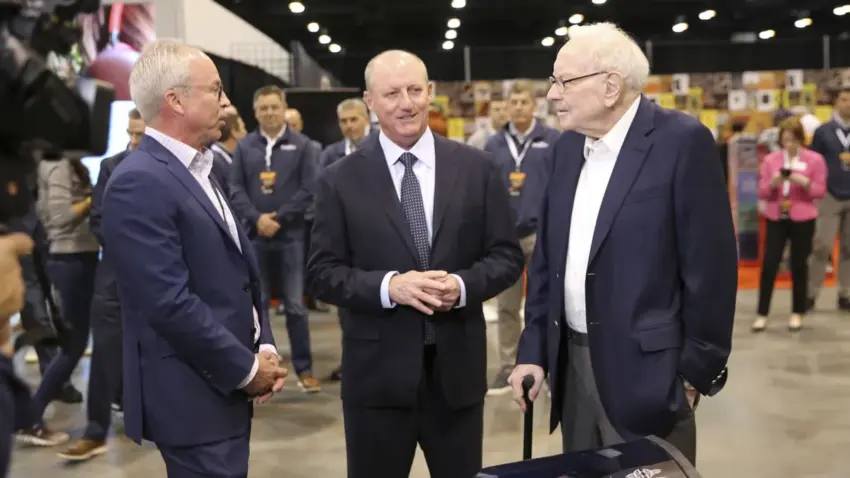
For the first time, Warren Buffett will not be the central figure at Berkshire Hathaway’s annual meeting on May 2, 2026, in Omaha. This marks a significant leadership transition as Greg Abel officially takes over as CEO.
The change raises an essential question: How will this shift impact Berkshire Hathaway’s future? The answer lies in the numbers and recent performance. Operating earnings fell nearly 30% in the fourth quarter of 2025, largely due to a staggering 54% drop in insurance underwriting profits. Furthermore, Berkshire’s shares have dipped more than 5% year to date.
Berkshire Hathaway’s annual meeting has historically been a major event for investors, often featuring Buffett’s insights that shaped the company’s direction. But this year, with Buffett stepping back, Abel faces the challenge of reassuring shareholders amid these troubling financial indicators.
Key statistics:
- Berkshire has trailed the S&P 500 index by more than 30 percentage points since Buffett signaled plans to step down last May.
- The company resumed stock buybacks in March for the first time since 2024, repurchasing roughly $226 million.
- Abel used his entire after-tax salary of $15 million to personally buy Berkshire shares.
- The annual meeting is expected to draw around 30,000 shareholders.
Industry experts are watching closely. Macrae Sykes remarked, “Clearly, nobody can replace Warren on the stage.” Meanwhile, Bill Stone noted that expectations for earnings growth are tempered: “I think part of it is really hard to expect a whole lot of earnings growth this year.” The uncertainty surrounding Abel’s leadership style and strategic decisions adds another layer to this transition.
This pivotal moment could redefine how Berkshire Hathaway operates moving forward. As shareholders prepare for the upcoming meeting, they are left wondering how Abel will navigate these challenges and what strategies he will implement to restore confidence in the company’s financial health.

Emily Carter
Emily is a lifestyle and culture writer with a passion for storytelling.