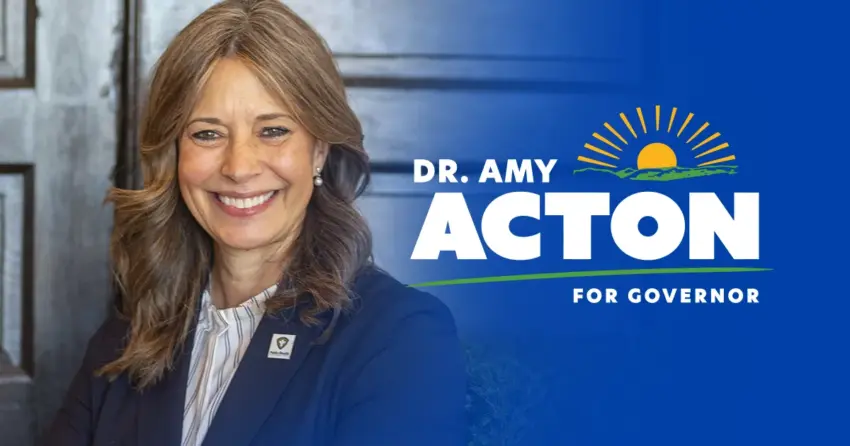
Amy Acton and Vivek Ramaswamy are gearing up for a showdown in the Ohio gubernatorial election on November 1, 2026. Both political newcomers have emerged victorious from their respective primaries, with Acton representing the Democrats and Ramaswamy the Republicans.
Acton, who gained national recognition as Ohio’s health director during the COVID-19 pandemic, has positioned herself as a candidate for the people. “I am running for governor because people in this state are struggling,” she stated during her campaign launch. Her fundraising prowess is evident—she raised over $10 million to support her bid.
Meanwhile, Ramaswamy has made waves with his aggressive campaign strategy, reportedly spending $25 million on ads and taking out a personal loan of the same amount to fuel his efforts. He’s received endorsements from high-profile figures including President Donald Trump and the Ohio Republican Party. “There has never been a greater contrast between two candidates,” he remarked, highlighting the stark differences between himself and Acton.
As they prepare for the general election, observers note how their backgrounds shape their platforms. Acton describes herself as a “scrappy kid from Youngstown,” bringing a personal touch to her campaign. In contrast, Ramaswamy has accused her of villainizing success—a jab that reflects his focus on business and economic growth.
Key facts about the candidates:
- Amy Acton is the Democratic nominee for governor and was unopposed in her primary.
- Vivek Ramaswamy is the Republican nominee who faced a challenge from Casey Putsch.
- The last Democrat to hold the office was Ted Strickland, who left in 2011.
With both candidates promising to address pressing issues—like healthcare accessibility and economic recovery—voters are eager to see how their contrasting approaches play out. Acton’s commitment resonates: “No one will ever be invisible to me.” It’s a promise she aims to keep as she steps into this pivotal race.
The stakes are high. As the election date approaches, both campaigns will ramp up their efforts to connect with voters across Ohio. Political analysts expect intense debates and heavy media coverage leading up to November 1.

Sarah Jenkins
Sarah is an investigative reporter focusing on politics and social issues.